Setting Up a Safe Sleep Space: The Bare-Crib Rules and What They Mean for Your Shopping List
- The Short Version: A Safe Sleep Space Is Almost Empty
- Why "Bare Is Best" Isn't Just a Slogan
- The Sleep Surface: Where Your Money Should Go
- What Belongs in the Crib vs. What Doesn't
- Dressing Baby for Sleep in a Warm Climate
- Where the Crib Goes: Room Setup Rules
- The "But It's Marketed for Sleep" Trap
- The Bottom Line Shopping List
The Short Version: A Safe Sleep Space Is Almost Empty
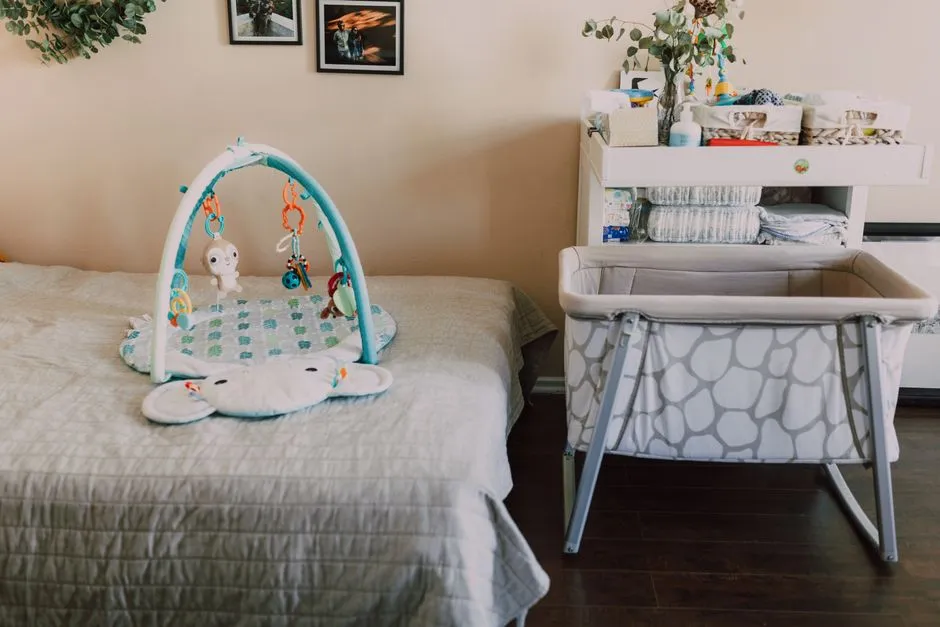
Walk into any baby store and the crib displays are piled with quilts, bumpers, pillows, and stuffed animals. Walk into a nursery set up to current safety guidance and the crib holds exactly two things: a firm, flat mattress and a fitted sheet. That gap between how cribs are merchandised and how they should actually be used is the single most important thing to understand before you start shopping.
The American Academy of Pediatrics (AAP) safe-sleep recommendations come down to a handful of rules:
- Back to sleep, every sleep — naps and nighttime, until baby's first birthday.
- A firm, flat, non-inclined sleep surface that meets current federal safety standards — a crib, bassinet, or play yard, not a lounger, swing, or car seat.
- A bare sleep space — no blankets, pillows, bumper pads, positioners, stuffed animals, or loose bedding of any kind.
- Room-sharing without bed-sharing — baby sleeps in your room, on their own separate surface, ideally for at least the first six months.
- No overheating — dress baby lightly and keep the room comfortable; this matters extra in a warm climate.
Everything below unpacks what those rules mean for your actual shopping list: what to buy, what to skip entirely, and how to tell marketing from safety.
Why "Bare Is Best" Isn't Just a Slogan
The bare-crib rule exists because soft objects and loose bedding are suffocation hazards for a baby who can't yet reliably lift or turn their head. The AAP's guidance is built around reducing sleep-related infant deaths, and the consistent thread through every revision is the same: babies sleep safest alone, on their backs, on a firm flat surface, with nothing else in the space.
This is genuinely good news for your budget. A huge share of what's sold in the nursery aisle — crib bumpers, quilted bedding sets, wedges, positioners, pillow-like loungers marketed with cozy nap photography — has no place in a safe sleep setup. When we build registry checklists, the sleep section is one of the shortest and cheapest, because the safety consensus does the editing for you.
One date worth knowing: since mid-2022, federal law (the Safe Sleep for Babies Act) has prohibited the sale of padded crib bumpers and inclined sleepers in the US. If you're offered either secondhand, decline — they weren't pulled from shelves for style reasons.
The Sleep Surface: Where Your Money Should Go
The crib, bassinet, or play yard
Your baby's dedicated sleep surface is the one place in the nursery to prioritize spending, and "prioritize" mostly means buy something that meets current standards, not buy something expensive. A new crib sold in the US today must comply with current CPSC crib standards — that compliance is the safety floor, and a $180 crib and an $800 crib both stand on it. Beyond that, you're paying for materials, finish, and conversion features. Our guide to the best cribs walks through how we separate sturdy value picks from overpriced showpieces.
If you're starting with a smaller bedside option for the newborn months, that's a fine plan too — see our breakdown of bassinet vs. crib for when each makes sense. Either way, the same rules apply: firm, flat, bare.
Worth knowing about used cribs: hand-me-downs are where safety problems hide. Drop-side cribs were banned in 2011, older cribs may have slat spacing wider than the current 2 3/8-inch maximum, and hardware fatigue is invisible until it fails. A used crib can be fine if it's recent, complete, and verifiably compliant — but it's the one nursery category where we suggest real caution, and where checking cpsc.gov for recalls isn't optional.
The mattress
Firmness is the spec that matters, and it's counterintuitive: a safe crib mattress feels much harder than an adult would find comfortable. It should spring back immediately when you press it and shouldn't conform to your baby's head. Fit matters too — the classic check is that you shouldn't be able to slip more than two fingers between the mattress and the crib frame. Gaps trap limbs and, worse, faces.
You do not need a plush, pillow-top, or "memory foam" crib mattress; those features work against safety for infants. What's worth comparing is cover cleanability, weight (you'll be changing sheets one-handed), and dual-sided designs that firm-side for infancy and soften slightly for toddlerhood. We cover the specs in detail in our crib mattress buying guide.
The sheet
A fitted sheet sized for your exact mattress, pulled taut, with elastic that holds under tension. That's it. Two or three in rotation is plenty. Skip flat sheets, skip sheet "toppers," and skip anything that layers loose fabric into the crib.
What Belongs in the Crib vs. What Doesn't
This table is the shopping list, condensed. When in doubt, the answer for the first year is almost always "keep it out."
| Item | In the crib? | Why |
|---|---|---|
| Firm, flat mattress + fitted sheet | Yes | The entire approved sleep surface |
| Wearable blanket / sleep sack | Yes (worn, not loose) | Warmth without loose fabric |
| Pacifier (once feeding is established) | Yes | Associated with reduced sleep-related risk; no clips or attachments in the crib |
| Swaddle (pre-rolling only) | Yes, with limits | Stop swaddling at the first sign of rolling |
| Blankets, quilts, comforters | No | Loose bedding is a suffocation hazard |
| Pillows and pillow-like loungers | No | Soft, conforming surfaces are unsafe for infant sleep |
| Crib bumpers (padded or "mesh alternative" pads) | No | Padded bumpers are banned from sale; nothing tied into the crib is worth the risk |
| Stuffed animals and soft toys | No | Same soft-object hazard; save them for supervised playtime |
| Positioners and wedges | No | Not needed for healthy babies and add risk |
| Weighted swaddles or weighted sleep sacks | No | The AAP recommends against weighted sleep products |
| Home "vital sign" monitors as safety devices | Not as a substitute | Fine as a parent-comfort gadget, but no monitor replaces safe-sleep practice |
Dressing Baby for Sleep in a Warm Climate
Overheating is a recognized risk factor, and it's the rule island families are best positioned to get right — because here, the temptation to over-bundle barely exists. Practical guidance:
- Dress baby in about one more light layer than you'd wear to be comfortable in the room — and in a warm bedroom, that often means a single lightweight layer or just a diaper and a thin sleep sack.
- Check the back of the neck or chest, not hands and feet, to judge temperature. Sweating, flushed skin, or damp hair mean too warm.
- Airflow is your friend. A fan in the room is fine and keeps air moving through humid nights; just don't point it directly at the crib at close range.
- Choose breathable fabrics — lightweight cotton and muslin sleep sacks over fleece or quilted options, which are built for climates we don't have.
Sleep sacks come in warmth ratings (often listed as TOG values); in a warm bedroom, the lightest ratings — roughly 0.5 TOG or less — are usually the year-round answer.
Where the Crib Goes: Room Setup Rules
A safe sleep space extends a couple of feet beyond the crib rails:
- In your room for the early months. The AAP recommends room-sharing — baby on their own separate surface near your bed — ideally for at least the first six months. This is where a bassinet or compact play yard earns its keep.
- Away from windows, cords, and hanging anything. Blind cords, curtain ties, monitor cables, and wall hangings should all be out of reach of the crib. Cord-free window coverings are the clean solution.
- Clear of shelves and heavy decor. Nothing that could fall into the crib should be mounted above it.
- Not against a heat source or in direct afternoon sun, which can quietly overheat the sleep space even when the room feels fine.
- Mobile rule of thumb: hung well out of reach, and removed entirely once baby can push up on hands and knees.
The "But It's Marketed for Sleep" Trap
The hardest part of shopping this category is that unsafe-for-sleep products are routinely photographed with sleeping babies. A few honest translations:
- Loungers and nap "docks" are supervised-awake-time products. If a baby falls asleep in one, current guidance says move them to a firm, flat surface.
- Swings, bouncers, and car seats are for travel and awake time. Outside a moving car, a baby who falls asleep in a car seat should be moved to a flat sleep surface when practical.
- "Breathable" bumpers and crib padding solve a problem the bare crib already solved. Nothing tied to the rails earns its place.
- Inclined "sleepers" are banned from sale for good reason. Flat means flat.
None of this makes those products useless — a bouncer is a legitimately helpful shower-timer. It just means the word sleep on a box is a marketing claim, not a safety clearance.
The Bottom Line Shopping List
A safe sleep setup is one of the cheapest wins in the whole nursery: a compliant crib or bassinet, a firm mattress that fits it tightly, a few fitted sheets, and two or three light sleep sacks. Spend your saved money on the categories where quality genuinely varies — start with our crib picks and the mattress guide — and let the bare-crib rule keep the rest of the aisle off your registry.
As always: this is buying guidance, not medical advice. For questions about your baby's sleep, breathing, or positioning needs, your pediatrician is the right call.