The Best Play Gyms and Activity Mats: Picks That Earn Months of Floor Time
Our Top Picks at a Glance
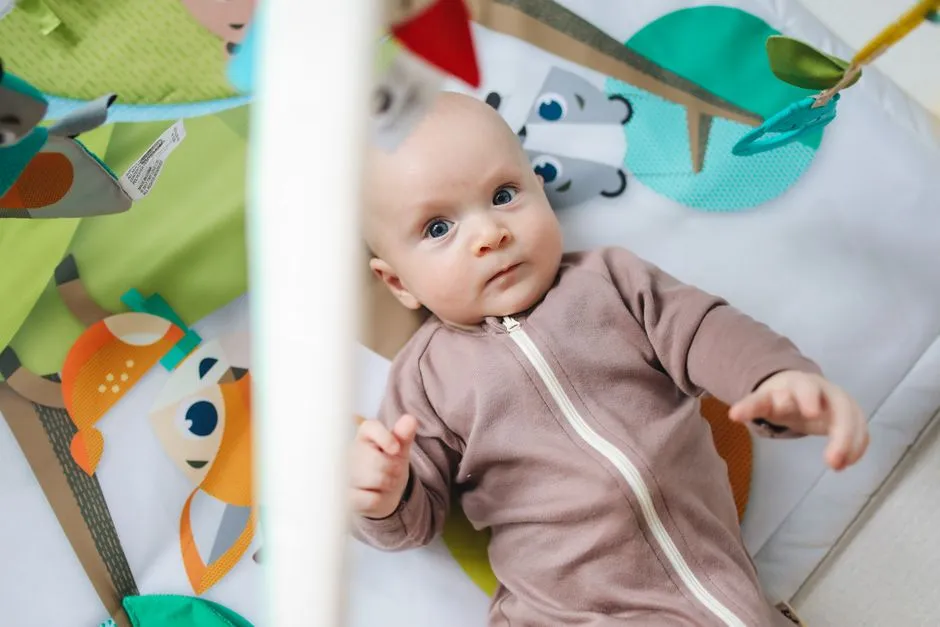
A play gym is one of the few pieces of baby gear that earns its floor space from week one: it gives a newborn something to look at, a three-month-old something to bat, and a five-month-old something to grab and pull. The best ones keep working after the arches come down, because the mat underneath becomes tummy-time and sitting territory for months.
Here is where we landed after weighing dozens of options against our criteria:
- Best overall: Lovevery Play Gym — a stage-based design that genuinely grows with your baby, with a washable mat and honest developmental logic behind every zone.
- Best budget pick: Fisher-Price Deluxe Kick & Play Piano Gym — the kick-activated piano keeps babies engaged far longer than its price suggests.
- Best-looking mid-range option: Skip Hop Baby Activity Gym — soft, well-made, and neutral enough to live in your living room without shouting about it.
- Best classic arch gym: Tiny Love Gymini — the flexible criss-cross arches make tummy time and side-lying play easier than fixed-frame designs.
- Best minimalist option: a wooden arch gym — simple hanging toys and no electronics, ideal if you plan to rotate your own toys.
- Best for the crawling stage: a large folding foam play mat — not a gym at all, but the thing you'll actually want under a mobile baby.
If you only buy one thing, make it a gym with a generously sized, machine-washable mat. If you can budget for two purchases across the first year, add a big foam mat around the time your baby starts scooting.
How We Judge Play Gyms and Activity Mats
We don't sell any of these products, and no brand influences our picks. Every recommendation here is measured against the same five criteria:
- Developmental range. Does it support what babies actually work on in year one — visual tracking, batting, grasping, tummy time, rolling, sitting — or does it just light up? A gym that stays interesting from 0 to 9 months beats one that peaks at 12 weeks.
- Washability. Babies spit up on play mats. A lot. Machine-washable mats and wipeable arches are near-mandatory, especially in a humid climate where fabric that stays damp gets musty fast.
- Safety basics. No small detachable parts, securely stitched loops, and nothing marketed as a sleep surface. Play gyms are for awake, supervised time only — a drowsy baby moves to a bare crib or bassinet, full stop.
- Footprint and storage. Island homes and apartments don't have a spare room for baby gear. We favor gyms that fold flat or break down quickly.
- Staying power. Can parts be repurposed — arches removed, toys clipped elsewhere, the mat kept for sitting practice — or is it abandoned in six weeks?
For a broader look at what babies need month by month, our baby toys by age guide pairs well with this one.
Comparison Table
| Pick | Best for | Mat washable? | Electronics | Typical price range* | Folds/stores flat |
|---|---|---|---|---|---|
| Lovevery Play Gym | Whole first year, stage-based play | Yes, machine washable | None | $130–$160 | Partially (legs detach) |
| Fisher-Price Kick & Play Piano Gym | Budget buyers, kick-happy babies | Yes, machine washable | Piano lights/sounds | $40–$60 | Arch removes |
| Skip Hop Activity Gym | Style-conscious mid-range | Yes, machine washable | None (some toys chime) | $60–$90 | Arches remove |
| Tiny Love Gymini | Tummy time flexibility | Yes, machine washable | Varies by version | $40–$80 | Yes, arches flex down |
| Wooden arch gym | Minimalist, toy-rotation households | Mat usually sold separately | None | $50–$100 | Yes, most fold flat |
| Folding foam play mat | Crawlers and new sitters | Wipe-clean surface | None | $50–$120 | Yes, folds like a book |
*Editorial ranges only — prices vary by retailer, size, and version. We don't sell products and don't track live pricing.
The Picks in Detail
Best Overall: Lovevery Play Gym
The Lovevery Play Gym is the pick we recommend most often when a family asks for one gym to cover the whole first year. Its design is organized around stages: high-contrast cards and simple dangling toys for the newborn weeks, batting and grasping targets for the middle months, and a mat with zones (textures, colors, hiding elements) that keeps a sitting baby busy long after most gyms are boxed up. The mat converts into a hexagonal play space, and everything fabric goes in the washing machine.
What earns it the top spot is restraint. There are no lights or speakers — the baby does the work, which is exactly what open-ended play should look like. Wooden and fabric elements feel sturdy, and the whole thing reads as furniture rather than plastic clutter.
Worth knowing: it's the most expensive pick here by a wide margin, typically running north of $130. If budget is tight, a cheaper gym plus a few well-chosen toys covers most of the same developmental ground — the Lovevery buys convenience and cohesion, not magic.
Best Budget: Fisher-Price Deluxe Kick & Play Piano Gym
This gym has been a fixture on registries for years for a simple reason: the kick-activated piano gives pre-grasping babies a cause-and-effect payoff months before their hands can do the job. Kick, hear a note, kick again — that feedback loop is genuinely valuable for young babies, and it's why this pick survives our usual skepticism about light-up gear. The arch repositions for tummy time, the mat machine-washes, and the whole thing typically costs less than half of most mid-range gyms.
Worth knowing: it's loud, it's brightly plastic, and the electronic stimulation does some of the work a quieter gym leaves to the baby. Use the volume settings, and expect the visual style to dominate whatever room it lives in.
Best Mid-Range: Skip Hop Baby Activity Gym
Skip Hop's activity gyms hit a sweet spot: better fabric quality and more thoughtful toy variety than budget options, at roughly half the cost of premium gyms. The hanging toys cover a sensible sensory spread — a crinkle toy, a rattle, a teether, a mirror — and the loops accept other clip-on toys, which matters more than the included set. The neutral palettes on most versions are an easy fit for shared living spaces.
Worth knowing: it doesn't have a stage-based system, so around the sitting stage it becomes "just a mat" sooner than the Lovevery does. That's fine — a mat plus a basket of rotated toys is a perfectly good setup — but know that's the trajectory.
Best Classic Arch: Tiny Love Gymini
The Gymini's signature is its flexible criss-cross arches, which bend outward or flatten down. That sounds like a gimmick until you're running tummy-time sessions: dropped arches put toys at eye level for a baby on their belly, and the open-side position makes it easy to lie next to your baby, which is half of what makes floor time work. Toys reposition anywhere along the arches, and the mats machine-wash.
Worth knowing: the Gymini comes in many versions, and visual busyness varies a lot between them — some are calm, some are a carnival. Check the specific version rather than assuming they're all alike, and skip versions whose feature lists lean hard on electronics.
Best Minimalist: A Wooden Arch Gym
If your plan is toy rotation — a few simple objects, swapped as your baby's skills change — a basic wooden arch gym is all the structure you need. Brands like Finn + Emma and a number of small workshops make foldable birch arches with hanging rings or knit toys; most fold flat in seconds and look at home in a minimalist nursery. You control exactly what hangs from it, which is the whole appeal.
Worth knowing: most wooden gyms don't include a mat, so budget for a washable quilt or padded mat separately. And verify the basics before buying from a small maker: finished smooth edges, non-toxic finishes, and hanging toys with no small detachable parts. If a listing can't answer those questions, move on.
Best for Crawlers: A Large Folding Foam Play Mat
Once your baby starts scooting, the gym mat that felt huge becomes an island they immediately leave. What earns floor space in the second half of year one is a large one-piece folding foam mat — typically around 4-by-6 feet, an inch or so thick, with a wipe-clean surface. It cushions the falls that come with sitting and pulling up, defines a play zone on hard flooring, and folds up like a book when you need the room back.
We recommend one-piece folding mats over interlocking foam tiles: tiles are cheaper, but seams collect crumbs and determined babies pry them apart, and pried-apart pieces become chew targets.
Worth knowing: these are bulky even folded, and a big mat visually takes over a small living room. Measure your actual floor space before choosing a size — the biggest mat is not automatically the right one.
Play Gym Safety, Briefly
A play gym is awake-time equipment. The safety rules are short but non-negotiable:
- Never for sleep. If your baby dozes off under the gym, move them to their bassinet or crib — a firm, flat, bare sleep surface with no blankets, pillows, or positioners. No padded mat is a safe sleep surface.
- Supervised use only, especially once your baby can grab and pull. Check hanging-toy attachments regularly.
- Watch the details. No strings long enough to wrap, no detachable parts small enough to swallow, and retire anything with torn stitching that could free small pieces.
- Register your gear with the manufacturer and check cpsc.gov for recalls, the same habit we recommend for every product category.
What You Can Skip
Honest shop-assistant talk: you do not need a play gym and an activity center and a bouncer with a toy bar and a piano mat. They occupy the same developmental slot, and floor time on a simple mat does most of the heavy lifting in year one anyway. One good gym, one foam mat later, and a small rotating set of toys is a complete setup. If you're deciding what makes the cut, our baby registry checklist sorts the essentials from the nice-to-haves, and the rest of our play and development guides cover what comes after the gym stage.
Bottom Line
Buy the Lovevery Play Gym if the budget allows and you want one purchase that lasts the year. Buy the Fisher-Price Kick & Play if it doesn't — it delivers real engagement for the price of a few packs of diapers. Go wooden if you'd rather curate your own toys, and whatever you choose, plan on a big folding foam mat once crawling starts. Every pick here has a washable mat or wipeable surface, no small parts, and a realistic shot at surviving months of daily use — which is exactly the bar a piece of floor gear has to clear.