The Complete Baby Registry Checklist: What You Actually Need, What Can Wait, and What to Skip
What belongs on a baby registry?
A practical baby registry covers five jobs first: a safe sleep space, safe car travel, feeding, diapering, and a realistic way to get around. Put those systems on the list before nursery decor or single-purpose gadgets. For sleep, that means an approved crib, bassinet, play yard, or bedside sleeper with a firm, flat surface and fitted sheet only; always place baby on their back. Add clothing, bath basics, and a few awake-time items in modest quantities.
This checklist is intentionally staged. “Before birth” means assembled, checked, and ready. “First three months” means useful soon but not necessarily on day one. “Later” means the purchase can wait until your baby’s size, habits, and your home routines are clearer.
The before-birth baby registry checklist
Safe sleep: one complete system
Choose one primary sleep space that is intended for infant sleep and meets current federal requirements: a crib, bassinet, play yard, or bedside sleeper. The U.S. Consumer Product Safety Commission’s safe-sleep guidance says “Bare is Best”: use only a fitted sheet, place baby on their back, and leave pillows, blankets, bumpers, toys, positioners, and weighted products out.
Register for:
- One compliant crib, bassinet, play yard, or bedside sleeper
- A firm, flat mattress made for that exact product
- 2–3 fitted sheets per sleep space
- 3–4 correctly sized, unweighted swaddles or sleep sacks
- The correct waterproof mattress protector, if the manufacturer permits one
A mattress should fit tightly. The two-finger check remains a useful physical screen: a gap wider than two fingers at the crib end can create an entrapment hazard, as the CPSC explains in this crib-mattress recall. Do not improvise with padding to close a gap; use the mattress size specified by the crib manufacturer.
The American Academy of Pediatrics recommends room-sharing without bed-sharing, preferably for at least the first 6 months. Its current safe-sleep summary also says to stop swaddling when a baby shows signs of trying to roll, usually around 3–4 months but sometimes earlier. A monitor is not a substitute for a safe sleep setup and is not a strategy for preventing SIDS.
If you choose a convertible crib, confirm the conversion kit’s exact model number and availability before adding it. Our crib buying guide compares the decisions that matter, while safe sleep nursery setup keeps the safety rules in one place.
Car travel: a seat that fits from the first ride
Have a rear-facing car seat correctly installed before the first car journey. Whether a particular hospital checks the seat is a local policy question, not the reason to buy one. The reason is that every ride needs an appropriate restraint.
Register for either a rear-facing-only infant seat or a convertible/all-in-one seat approved for your newborn’s size. Then:
- Read both the car-seat manual and the vehicle manual.
- Keep the child rear-facing until reaching the manufacturer’s top rear-facing height or weight limit.
- At the belt path, the installed seat should not move more than 1 inch side to side or front to back.
- Tighten the harness until no extra webbing can be pinched at the shoulder; place the chest clip at armpit level.
- Register the seat with its manufacturer so recall notices can reach you.
Those fit and installation points come directly from the National Highway Traffic Safety Administration’s rear-facing instructions. A Child Passenger Safety Technician can check an installation when the manuals do not settle a question.
Car seats expire. The exact useful life belongs to the model, label, and manual rather than a universal countdown. Manufacturer examples commonly sit in the familiar 6–10-year range: Graco currently describes 7- and 10-year useful lives for different constructions on its expiration guidance. Use the date printed for your actual seat, not the range in an article.
Our car-seat buying guide explains infant versus convertible seats. If the infant seat clicks into a stroller, verify compatibility by exact model rather than brand alone.
Diapering: enough for the first week, not the first year
Use 8–12 diaper changes a day as a first-box planning assumption, then reorder based on your baby’s actual use and fit. Babies do not all stay in newborn size for the same length of time.
Start with:
- One small pack or box of newborn diapers
- More size 1 and size 2 diapers, but keep receipts where possible
- Unscented wipes or your chosen washable-wipe setup
- A barrier cream you have discussed with your baby’s clinician if skin is sensitive
- A stable changing pad with a washable or wipeable cover
- A diaper caddy for the places where changes will actually happen
- A lidded trash can or diaper pail
Check the cost and availability of proprietary refill bags before choosing a pail. A regular lidded can emptied frequently may suit a small home better. Secure furniture according to its manufacturer’s instructions and keep one hand on the baby during every elevated change.
Feeding: buy a trial set, then learn
Feeding preferences and bottle acceptance can change quickly, so depth is less useful than flexibility. A balanced starter list is:
- 4–6 small bottles, around 4–5 oz, with slow-flow nipples
- One bottle brush and a separate wash basin if washing by hand
- A clean drying area
- 10+ burp cloths
- Nursing pads and other simple comfort supplies if nursing
- Formula-preparation supplies if formula feeding, chosen to match the instructions on the formula
If you plan to pump in the United States, check insurance before using registry money. HealthCare.gov says Marketplace and most other plans must cover breastfeeding equipment and counseling, except grandfathered plans; whether the pump is new or rented, manual or electric, and when it is supplied can depend on the plan.
Do not automatically cross sanitizing equipment off the list. The CDC’s current feeding-item guidance says bottles should be cleaned after every feed. Daily sanitizing is particularly important for babies younger than 2 months, babies born prematurely, or babies with a weakened immune system. A dishwasher using hot water and heated drying or a sanitizing setting can remove the need for a separate sanitizing step; boiling cleaned, heat-safe parts for 5 minutes is another CDC-listed method. Check each item’s manufacturer instructions.
A countertop sterilizer may be useful when the recommended routine and your kitchen make it the simplest option. A bottle warmer is optional; if you use one, follow its instructions and check milk temperature before feeding. See how to sterilize baby bottles and whether bottle warmers are worth it for the two separate decisions.
Clothing and bath: deliberately modest quantities
Start with 5–7 bodysuits and 5–7 sleepers in newborn size, then add more in 0–3 and 3–6 months. Climate, laundry frequency, spit-up, and birth size will decide whether that is enough. Zips can be convenient for night changes, but fabric, fasteners, and fit still need to be comfortable and safe.
For bathing, add:
- One baby tub or bath support used exactly as directed
- 2–3 towels
- Soft washcloths
- A mild cleanser chosen with your clinician if your baby has a skin condition
- Baby nail clippers or a file
- A nasal aspirator
An infant bath seat is not a safety device. The CPSC bath-seat standard requires a warning that an infant must never be left unattended in one. Set out the towel and clean clothing before the bath so you never have to step away.
What is useful during the first 3 months?
A stroller, carrier, or both
A stroller and a soft carrier solve different problems. Pick from the routines you actually expect: stairs, sidewalks, trunk space, public transport, long walks, or short errands. The stroller buying guide separates full-size, compact, and jogging designs by use rather than prestige.
For a carrier, confirm that the model accommodates your newborn’s weight and developmental stage. Follow the manufacturer’s positioning instructions and keep the baby’s face visible, airway clear, and chin off the chest. Our babywearing safety basics guide covers fit, while carriers for hot weather focuses on fabric and heat management.
One awake-time place and one floor space
A bouncer can provide a supervised, awake place to set the baby down. A play mat provides a firm floor area for supervised awake play and tummy time. One of each is usually enough.
If a baby falls asleep in a bouncer, swing, car seat, stroller, carrier, or other product not intended for sleep, move them to their crib, bassinet, play yard, or bedside sleeper as soon as practical. The CPSC specifically warns against leaving babies asleep in inclined or seated products.
A small support kit
Consider:
- A diaper bag or washable backpack with pockets
- An audio or video monitor chosen for the size of your home
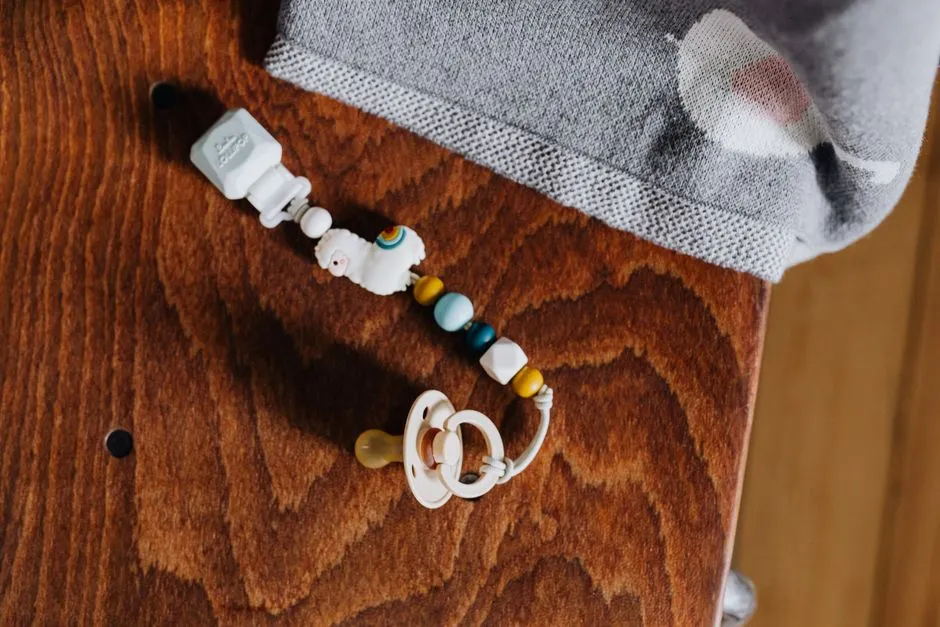
- 2–4 pacifiers in different shapes if you plan to offer one
- A digital thermometer and its instructions
- Saline drops and a simple first-aid kit selected with your pediatrician
- The pediatric practice’s daytime and after-hours contact numbers
A rectal temperature is the most reliable for infants, especially under 3 months, according to the AAP’s fever guidance. A baby 3 months old or younger with a rectal temperature of 100.4°F (38°C) or higher needs an immediate call to the pediatrician. Ask the clinician to show you the correct measurement method before you need it.
What can wait until 3–6 months or later?
These are reasonable registry items, but they do not need to occupy the house before birth:
- High chair: usually relevant when the baby is developmentally ready for solids; prioritize stability, the manufacturer’s fit limits, and easy cleaning. Read our high-chair guide before choosing.
- Convertible car seat: needed when the infant seat is outgrown, unless you started with one.
- Babyproofing supplies: choose after inspecting the actual cabinets, stairs, windows, cords, and furniture in the home.
- Straw cups and feeding ware: easier to select when the feeding approach is clearer.
- Activity center: a short-use-window item that should match the child’s developmental readiness and the product instructions.
The label “6 months” is only a planning marker. Development and each product’s minimum and maximum fit rules matter more than the calendar.
What should you skip?
Skip items that duplicate a system you already have, do not suit your space, or undermine a safety rule:
- Crib bumpers, sleep positioners, weighted swaddles or blankets, inclined sleepers, and loose bedding
- Shoes for a baby who is not walking
- A deep newborn-size wardrobe before you know birth size and growth
- A special diaper stacker when a basket already works
- A dedicated changing table when a secured dresser and approved changing pad fit the room
- A baby-food appliance if your existing kitchen tools safely do the planned job
- Multiple large awake-time seats with overlapping functions
- A wipe warmer unless your routine gives it a clear purpose
Do not treat every sterilizer or bottle warmer as an automatic skip. Cleaning and sanitizing needs differ, and convenience matters when a task happens repeatedly. Apply the CDC guidance and your baby’s clinician’s advice, then choose the least complicated method that you can perform correctly every time.
Which baby items can be used?
Secondhand can stretch the registry budget, but only when the item’s identity, condition, instructions, and recall status are clear.
| Item | Secondhand decision |
|---|---|
| Car seat | Consider only when every NHTSA check passes: no moderate or severe crash, model and manufacture labels present, not expired, no unresolved recall, all parts present, and manual available. Unknown history means no. |
| Crib | Use only with proof it meets current standards, all hardware and instructions, no recall, and no damage. Traditional drop-side cribs are out. |
| Crib mattress | A used mattress must still be firm, undamaged, hygienic, and an exact fit; buying new is the simplest way to remove uncertainty. |
| Clothing | Usually a strong used choice after checking condition, fasteners, and drawstrings. |
| Stroller | Check the model for recalls, then inspect brakes, folding locks, frame, wheels, and harness. |
| Bottles and nipples | Intact compatible bottles may be reusable after correct cleaning; replace worn, cracked, sticky, or damaged parts and follow manufacturer guidance. |
| Toys and play gyms | Confirm age suitability, recall status, secure parts, and cleanability. |
| Bouncer or swing | Confirm the exact model, instructions, harness, condition, and recall status; use only awake and supervised. |
NHTSA’s used car-seat checklist requires the manufacture date and model number partly so you can determine whether a seat is too old or recalled. The CPSC’s crib standards took effect June 28, 2011 and stopped manufacture and sale of traditional drop-side cribs; the CPSC crib page also notes stronger mattress supports, hardware, and testing.
How should you organize prices and gifts?
Build price tiers so guests can choose without guessing. A simple editorial framework is under $15, $15–$50, $50–$200, and $200-plus; adjust those bands to your family and guest list. Put useful small items in every tier rather than concentrating the registry in furniture and travel gear.
Completion discounts are retailer programs with dates, caps, and exclusions, not a guaranteed 10–15% market rule. As checked in September 2026:
- Target says its baby-registry offer is 15%, appears 8 weeks before the expected arrival date after the registry has been active at least 14 days, can be redeemed twice, and expires after 6 months. Restrictions apply.
- Babylist says its eligible-shop discount is 15% after the registry has been open 30 days, runs from 60 days before the expected arrival through 90 days after, and applies to up to $4,000 of purchases for maximum savings of $600. Exclusions apply.
Recheck the Target offer terms or Babylist discount terms before planning a purchase. Terms can change.
Register for consumables and gift cards if they serve you better than another decorative item. If space is the tighter constraint, the minimalist baby registry reduces this list to one working system at a time.
How much should you budget?
Separate planning limits from price claims. One useful worksheet gives each system its own ceiling: $250–$700 for sleep, $100–$250 for the first car seat, $150–$500 for a stroller, $50–$120 for the feeding starter set, and $150–$300 for the diapering setup and early supplies. These are broad budgeting envelopes, not current quotes or minimum safe prices.
Replace each envelope with current, dated prices for the exact products you select, then total the low and high versions. A low-four-figures total is possible inside those sample bands, but your real number may be lower or higher because insurance coverage, gifts, used clothing, location, shipping, tax, product choice, and how many months of consumables you include all change the result.
Spend first on a product that fits the child, home, vehicle, and safety requirements. Higher price is not a substitute for correct fit or correct use.
The final registry check
Before sharing the list, confirm that you have one complete answer for sleep, car travel, feeding, diapering, and getting around. Verify exact model compatibility, current recalls, dimensions, return windows, and who will assemble or install each item. Keep the newborn quantities shallow, retain receipts, and let later purchases wait until the baby gives you better information.