Play Yard vs Travel Crib: Which Portable Crib Fits You?
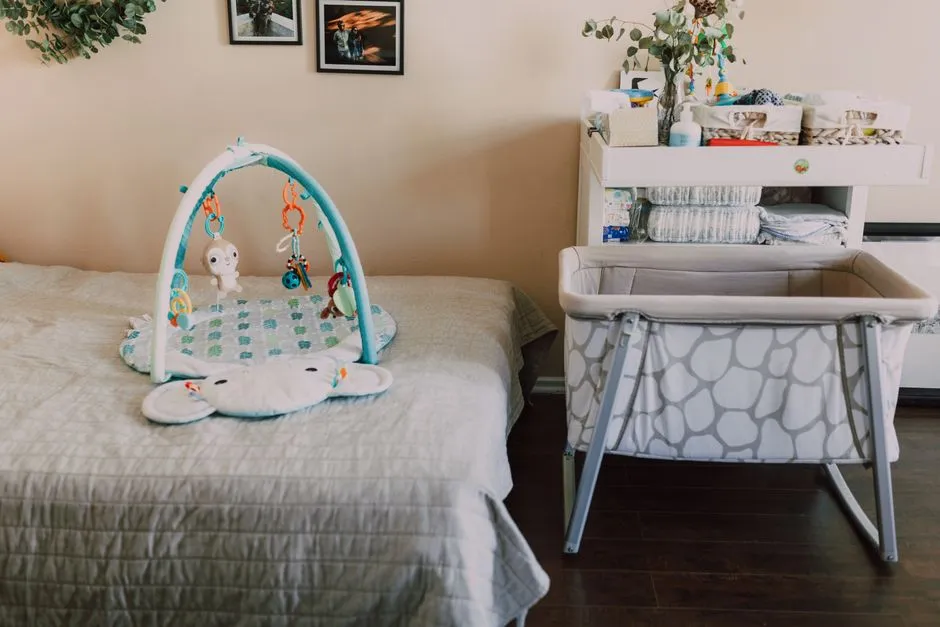
- Play yard or travel crib: which one do you actually need?
- Is a travel crib just a play yard with a better name?
- How do the two formats compare side by side?
- Which one is safer for sleep?
- Can I add a thicker, softer mattress?
- Are the bassinet insert and changing table worth it?
- Which one works better in a small, warm home?
- How long does each format last?
- What should I check on a borrowed, secondhand or hotel crib?
- So which should you buy?
- Sources
Play yard or travel crib: which one do you actually need?
A play yard is the bigger, heavier, feature-loaded format that lives at home and rides in the trunk; a travel crib is the lighter, stripped-down format built to be carried through airports. For sleep, neither is safer by category: in the U.S., a portable crib with mesh or fabric sides is regulated as a play yard either way. So choose by where it will live, how it travels, and which attachments you will really use, then follow the bare-space sleep rules every single time.
Below: what the labels mean, which accessories earn their weight, how long each lasts, and what to check on a borrowed one.
Is a travel crib just a play yard with a better name?
Mostly, yes. The U.S. Consumer Product Safety Commission (CPSC) defines a play yard as "a framed enclosure that includes a floor and has mesh or fabric sides," and its play yard business guidance says these products are intended for use "in or around the home, for travel, and other purposes." A soft-sided travel crib fits that definition, so it is built to the same mandatory federal rule as a full-size play yard. For products manufactured or imported on or after April 5, 2025, that page names the required standard as "ASTM F406-24 with modification."
"Pack 'n Play" is Graco's product name for its play yards, and it became the everyday word for the category. "Travel crib" is a marketing label, not a separate safety class; it usually signals a lighter frame, a compact fold and fewer extras.
Two edge cases are worth knowing:
- Rigid-sided portable cribs are a different regulated product. CPSC's non-full-size crib guidance describes a portable crib as one designed to be "folded or collapsed, without disassembly," and lists play yards as outside that standard. A CPSC crib standard Q&A puts it plainly: "The crib standards cover portable cribs, but not play yards."
- Inflatable play yards are not covered by the play yard regulation at all, according to the CPSC page above. An inflatable travel bed is not a play yard, whatever the box photo suggests.
How do the two formats compare side by side?
Models vary, so treat this as a description of the typical product in each format rather than a spec sheet. Check the exact model's listing and manual before you buy.
| Full-featured play yard | Dedicated travel crib | |
|---|---|---|
| Built for | Daily use at home, road trips | Flights, shuttles, carry-on-heavy trips |
| Weight and fold | Heavier; folds into a long bundle that suits a car trunk | Lighter; compact fold, often a backpack or duffel case |
| Attachments | Often a raised bassinet level, a changer, storage | Usually none |
| Setup | More parts, more steps | Fewer parts, faster |
| Price | Entry-level models are often the cheapest option in the category | Often costs more despite having fewer features |
| Sleep rules | Identical | Identical |
The surprise is in the price row: the travel crib often costs more and does less. You are paying for weight and fold engineering, not extra functions.
Which one is safer for sleep?
Neither format gets a pass, and neither needs one. The rules come from the sleep space, not the brand or the label:
- Bare is best. CPSC's safe sleep guidance means nothing but a fitted sheet in a crib, bassinet or play yard, and it lists play yards among the "products intended for sleep."
- Firm and flat. The American Academy of Pediatrics (AAP) parent site HealthyChildren.org says "A firm surface means that it shouldn't indent when your baby is lying on it," and that "Any surface that inclines more than 10 degrees isn't safe for your baby to sleep on."
- Back to sleep. The same page: "Place your baby on their back for all naps & at night."
- Fitted sheet only. AAP: "Use a fitted sheet only—nothing else should be in the crib with your baby." No pillows, blankets, bumpers, positioners or stuffed toys. Use a sheet made for your model's mattress size so it stays snug.
- No weighted products. AAP: "Don't use weighted blankets, sleepers, swaddles or other weighted objects on or near your baby."
If your baby dozes off in the car seat or stroller on the way to the hotel, AAP says to move them "to a firm sleep surface on their back as soon as possible." That is the moment the play yard or travel crib earns its keep. Our safe sleep setup guide covers the bare-space rules in more detail.
Can I add a thicker, softer mattress?
No. This is the most common mistake with both formats, because the factory pad feels thin. CPSC's play yard FAQ says instructions should specify that only the mattress supplied with the play yard be used, "to prevent head entrapment and suffocation between the mattress, sides, and floor structure." CPSC staff advise consumers "not to use supplemental mattresses because supplemental mattresses may create a gap and lead to an entrapment hazard."
The thin pad is the design. Use the one that came with your model, secured the way the manual shows, with a fitted sheet sized for it and nothing on top.
Are the bassinet insert and changing table worth it?
This is where the play yard pulls ahead for some families, especially in a small home where a separate bassinet and changing station would not fit.
The bassinet level. A raised bassinet saves your back in the newborn months. CPSC's play yard guidance says play yards with bassinet attachments "must meet the play yard requirements and the bassinet requirements," so a compliant model has been tested for both uses. Bassinet levels carry their own, lower limits, usually a weight cap and a developmental cutoff such as rolling or pushing up. The label and manual on your model set those numbers. When either is reached, move your baby down to the main floor of the play yard.
The changer. Handy in a one-bedroom or a vacation rental. It is a changing surface only, never a sleep surface. Follow your manual on its weight limit and on removing it before your baby goes into the play yard below.
Who should skip the extras: families who already own a bassinet, or who will use the portable crib mostly for trips. Every attachment adds weight, parts to lose and setup steps. If the crib is a flying crib, extras are dead weight.
If you are still deciding where your newborn sleeps at home in the first place, our bassinet vs. crib comparison walks through that choice.
Which one works better in a small, warm home?
A full play yard takes up a real rectangle of floor and tends to stay set up, which can be a plus: it doubles as a supervised play space and a daytime nap spot. A travel crib usually has a slightly smaller footprint and folds away faster when you need the floor back.
In a warm climate, mesh sides matter for both formats because they let air move through. Do not drape a blanket, towel or sheet over the top for shade or to make it darker. AAP warns that "Overheating can increase the risk of SIDS" and advises removing anything that could cover your baby's face, head or neck. Dress your baby in only one layer more than you are wearing, as AAP recommends, and keep the crib out of direct sun.
How long does each format last?
Longer than most people expect, and the limit is on the label, not the calendar. CPSC's play yard FAQ describes play yards as "sleeping and playing accommodation" for a child who cannot climb out and is "less than 35 in. (890 mm) in height." Individual models set their own weight and height limits, which can be lower, so read the label sewn into yours.
Stop using either format when your child reaches the model's stated limit or can climb out, whichever comes first.
What should I check on a borrowed, secondhand or hotel crib?
A play yard waiting in a rental or handed down from a cousin can be perfectly fine. Check it before the first nap:
- Recalls. Find the model name and number on the permanent label and search the CPSC recalls page. CPSC's play yard FAQ notes that federal requirements for these products include labeling and a product registration form. If you buy new, fill in that registration card so the manufacturer can reach you if a recall happens. If a secondhand unit has no label, you cannot check it, so do not use it.
- Original mattress. It should be the pad that came with that model, lying flat and snug. If you cannot confirm that, do not use it.
- Condition. Look for torn mesh, loose or missing hardware, and top rails that do not lock firmly. Practise the setup at least once, because a play yard that is not fully latched is not doing its job.
- Anything with a drop side. CPSC's 2011 crib rules "prohibit the manufacture or sale of traditional drop-side rail cribs." A hotel or hand-me-down crib with a side rail that slides down predates that rule and should not be used.
For any question about a specific product, the manufacturer's manual and customer service are the authorities; for your baby's health, ask your pediatrician.
So which should you buy?
Buy a full-featured play yard if it will live at home as a daytime play space and newborn bassinet, and travel mostly by car. Entry-level models are often the least expensive way into the category, and the bassinet level can replace a separate bassinet in a small home.
Buy a dedicated travel crib if you fly more than a couple of times a year or regularly carry gear through airports and shuttles. The lighter fold is the whole point; our best travel cribs guide compares current models.
Buy one, not both, unless you genuinely need a home play yard that rarely moves and a crib for frequent flights. Whichever format you choose, the sleep setup never changes: original mattress, fitted sheet, nothing else, baby on their back.