The Best High Chairs: Easy-to-Clean Picks That Last Past the First Year
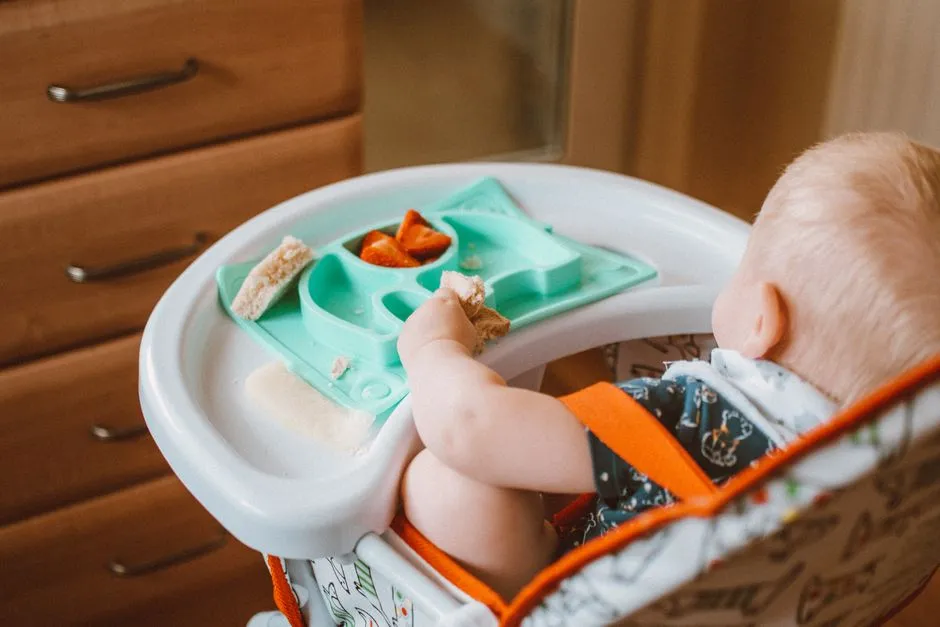
- Which high chair is easiest to clean?
- Safety comes before the cleanup score
- Five high chairs compared for cleanup
- Stokke Clikk: best overall for routine cleanup
- IKEA Antilop: best budget and simplest shell
- Stokke Tripp Trapp: best when years of use matter
- Graco Blossom: best for multiple configurations
- Inglesina Fast: best only for a compatible table
- How to test “easy to clean” before buying
- Which chair should you choose?
Which high chair is easiest to clean?
Among the five chairs compared here, the Stokke Clikk is our best balance of low-effort cleaning and a complete floor-chair setup: its plastic parts take mild soap and warm water, its tray is dishwasher-safe up to 70°C/160°F, and it includes a harness and footrest. The IKEA Antilop is the simpler budget choice. Choose the Tripp Trapp for long service, the Graco Blossom for multiple configurations, or the Inglesina Fast only when a compatible table and portability matter most.
This is a desk-researched comparison, not a claim that we used these chairs with children. We checked current manufacturer pages and instructions on September 4, 2026, then compared food-contact cleanup, removable fabric, restraint setup, footprint, current availability and useful life. Prices and stock can change; verify the exact model, included parts and manual before buying.
Safety comes before the cleanup score
For U.S. floor high chairs, the Consumer Product Safety Commission’s high-chair regulation FAQ identifies tray disengagement, falls, entrapment and tip-overs as hazards addressed by the federal rule. Use the attached restraint every time, adjusted snugly. A tray is not a restraint. Stay close enough to watch the child, do not let a child climb into or stand on the chair, and keep the chair where a child cannot push against a wall, counter or table.
Use a high chair only when the child meets the exact manufacturer’s readiness, age and weight instructions. “Around six months” is not permission by itself. Discuss feeding readiness or positioning concerns with the child’s pediatric clinician.
Before using a new, secondhand or stored chair, find the model and manufacture date, check the CPSC recall database, inspect every restraint, fastener, lock and tray latch, and obtain the current manual. Stop using a chair with a missing restraint, broken part, unstable frame or unresolved recall. Register the product with the manufacturer so safety notices can reach you. CPSC requires registration options for durable infant or toddler products.
Hook-on table chairs are a different category. CPSC’s 2019 floor-high-chair safety notice explicitly says that standard does not include hook-on chairs. For the Inglesina Fast, the manufacturer’s table restrictions and installation instructions control every use.
Five high chairs compared for cleanup
| Chair | Best fit in this five-chair comparison | Food-contact cleanup | Fabric | Foot support | Current manufacturer-page note |
|---|---|---|---|---|---|
| Stokke Clikk | Best overall balance | Dishwasher-safe tray; plastic washed with mild soap and warm water | None in the base setup | Included footrest | Manual says unassisted sitting to 3 years/15 kg |
| IKEA Antilop | Best budget/simple shell | Polypropylene shell and tray wipe with mild soapy solution | Optional cushion only | No built-in footrest | U.S. set listed at $24.99 when checked |
| Stokke Tripp Trapp | Best long service | Wooden chair requires wiping; grooves and adjustable slots add detail work | Cushion optional | Height- and depth-adjustable footplate | U.S. chair listed at $249; baby parts extra |
| Graco Blossom 6-in-1, model 2136860 | Best multi-stage configuration | Dishwasher-safe tray insert; frame uses soap and warm water | Wipeable, machine-washable pad | Three-position footrest | Graco listed it as currently unavailable direct |
| Inglesina Fast | Best for a compatible table and travel | Fabric seat removes for delicate machine wash | Yes | None | U.S. page listed $79 basic colors and sold out when checked |
The price observations above are not offers or typical-market promises. Retailer bundles can differ, especially when a chair needs a baby set, tray or cushion to match the configuration described.
Stokke Clikk: best overall for routine cleanup
The Clikk wins this five-chair comparison because the everyday cleaning route is short and explicitly documented. The current Stokke Clikk user guide says to clean plastic parts with warm water and mild soap and permits the tray in a dishwasher up to 70°C/160°F. There is no default upholstered seat pad to remove after ordinary meals.
The chair includes its tray and harness, and Stokke lists the Clikk for a child capable of sitting upright unassisted, up to 3 years or 15 kg. Its footrest gives you a support surface without buying a third-party part. The legs splay beyond the seat, so measure the actual floor area rather than judging the footprint from the shell.
The trade-off is a defined endpoint. This is not the chair that becomes an adult seat or separate booster. Choose it when reducing daily seams, pads and wash cycles matters more than maximizing the number of configurations.
IKEA Antilop: best budget and simplest shell
The Antilop is a polypropylene seat and tray on four steel legs. IKEA’s current U.S. Antilop product page lists the set at $24.99, says it disassembles for transport, and directs owners to wipe the shell, tray and legs with a mild soapy solution and dry them with a clean cloth. It includes a safety belt and is intended for children who can sit unaided, up to age 3 or 33 pounds.
That makes it the budget winner and the fewest-parts option here. It does not fold, but the legs detach. It has no built-in footrest, recline or height adjustment, and its fixed shell will fit some children better than others.
Third-party Antilop footrests exist, but we do not count an unapproved accessory as part of the chair. An added part can change fit or stability. Use only accessories the chair manufacturer explicitly permits for the exact model, and never alter the restraint or drill the shell.
Stokke Tripp Trapp: best when years of use matter
The Tripp Trapp takes a different approach: its wooden seat plate and footplate adjust in height and depth so the chair can be reconfigured as the child grows. Stokke’s current U.S. Tripp Trapp page lists the chair from age 3 by itself and says the separately sold Baby Set enables use from about 6 months when ready. Stokke dates the design to 1972 and credits designer Peter Opsvik; that history does not replace checking the current bundle and manual.
As checked, the chair was $249, the Baby Set $105 and the tray $79 on Stokke’s U.S. pages. Those dated figures clarify the real bundle issue better than a broad “premium” label: the chair price is not the complete baby-feeding configuration.
Cleanup is moderate. There is no required fabric in the basic setup, but the wood surfaces, seat slots and installed baby components create more edges than a one-piece molded shell. Follow the finish-care instructions rather than hosing or soaking the chair. This pick makes sense when adjustable support and later chair use justify higher initial cost and more detailed wiping.
Graco Blossom: best for multiple configurations
Graco’s current page for Blossom 6-in-1 model 2136860 describes an infant high chair, full-size high chair, infant feeding booster, toddler booster and youth chair, including one arrangement that seats two children at once. The high-chair limit is 40 pounds; the toddler-booster limit is 60 pounds; Graco lists use through age 6 for the relevant later stage.
It preserves the original multi-stage advantage with exact limits. The one-hand removable tray has a dishwasher-safe insert, the pad is wipeable and machine washable, and the footrest has three positions. Six height positions and front wheels with locking rear casters add adjustment and mobility.
Those parts also make it the most involved cleanup in this set. Food can reach the pad, harness routes, joints and interfaces between components. The chair measures 22.5 inches wide by 29 inches deep and weighs 32.56 pounds, so it is not the small-kitchen pick.
Graco marked this model currently unavailable on its direct U.S. page when checked. Retail stock or another model number may differ. Confirm the model, included modes, manual and recall status before buying; do not assume a marketplace listing is identical because the name is similar.
Inglesina Fast: best only for a compatible table
The Fast removes floor legs from the equation by clamping to a table. Inglesina’s current Fast Table Chair page lists a 4.2-pound chair, use from 6 months up to 37 pounds, an integrated carry bag, and a removable fabric cover washable on a cold delicate cycle with low spin. That is travel-friendly, but it is a machine-wash rather than a one-wipe cleanup.
Table compatibility is a safety condition, not a convenience preference. Inglesina’s installation FAQ specifies a tabletop 0.8 to 3.5 inches (20 to 90 mm) thick. If the table has an apron or skirt, it must begin at least 3.25 inches (83 mm) from the edge so the arms seat fully. The company says not to use the chair on glass, a loose top, a table leaf, card table, single-pedestal table, tablecloth or placemat.
Check full contact above and below the tabletop and tighten both couplings exactly as the manual directs every time. Do not improvise around an incompatible table. There is no footrest, and the optional dining tray is separate. The direct U.S. page showed basic colors at $79 but sold out when checked, so availability must be confirmed elsewhere.
How to test “easy to clean” before buying
A product page saying “wipe clean” does not tell you the whole routine. In a store—or while studying the manual and product photos—trace one imagined spoonful of oatmeal through these six checks:
- Seat-to-back seam: Can food enter a joint, fabric channel or hidden cavity?
- Harness removal: Does the manual let you remove straps for cleaning, and can you reinstall them without guessing?
- Tray route: Is the whole tray dishwasher-safe, only an insert, or neither? Can it fit your dishwasher?
- Underside access: Can you reach the tray rails, crotch-restraint base and shell underside with ordinary tools?
- Fabric cycle: Is a pad wipe-only, hand-wash or machine-wash, and do you have a second setup while it dries?
- Reassembly check: Can every latch, leg and restraint return to its documented locked position?
Do not time only the first wipe. Include removing, washing, drying and correctly reinstalling every safety component. Never use a chair while a required restraint is drying or detached.
Which chair should you choose?
- Choose the Stokke Clikk when a low-seam floor chair with a dishwasher-safe tray and included footrest is the priority.
- Choose the IKEA Antilop when budget and a simple wipeable shell matter most, and the fixed fit works for your child.
- Choose the Stokke Tripp Trapp when you intend to adjust and use the chair for five years or longer and accept more detailed wiping and separate baby accessories.
- Choose the Graco Blossom when its booster and two-child configurations match a real plan and you have room for a 29-inch-deep, 32.56-pound chair.
- Choose the Inglesina Fast when travel or zero floor footprint matters and every table you intend to use meets the manufacturer’s restrictions.
A high chair can wait on a newborn registry until feeding use is approaching; the baby registry checklist separates early essentials from later purchases. If counter space is also under review, our bottle-warmer guide applies the same use-case test, and the minimalist registry helps keep one-purpose gear under control.
Whichever chair you buy, the safety routine stays the same: confirm readiness and model limits, assemble from the current manual, use the attached restraint snugly every time, supervise within reach, keep push-off surfaces away, inspect hardware, check recalls and stop at damage or a manufacturer limit.