When Can Baby Sit in a High Chair? 5 Readiness Signs
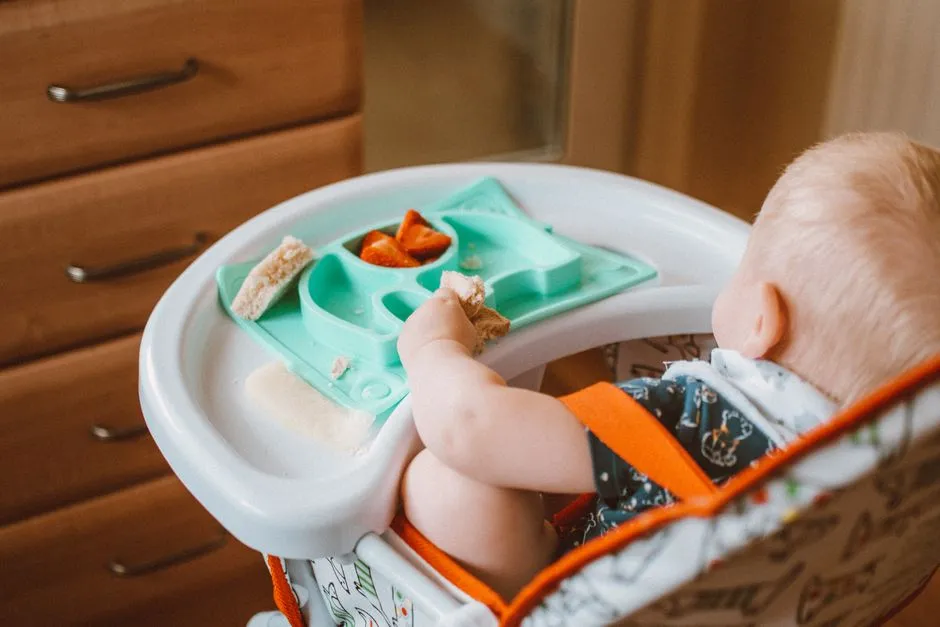
The Short Answer: Around 6 Months — But Watch the Baby, Not the Calendar
Most babies are ready to sit in a high chair somewhere around 6 months old, which is also when the American Academy of Pediatrics generally recommends starting solid foods. But "around 6 months" is an average, not a starting gun. Some babies are steady and eager at 5½ months; others need until 7 months or later to sit upright safely for a meal.
The age on the calendar matters far less than what your baby can physically do. A high chair asks a baby to hold their head steady, keep their trunk mostly upright, and manage food safely — all at the same time. That's a developmental milestone, not a birthday.
So instead of counting weeks, watch for the five readiness signs below. When you can check most of them off, your baby is ready for a seat at the table — and if you're still shopping, our guide to the best high chairs walks through what actually matters in a chair (spoiler: cleanability and a real footrest beat almost everything else).
The 5 Signs Your Baby Is Ready for a High Chair
These signs overlap heavily with the signs of readiness for solid foods, and that's no accident — the high chair and the first spoonful usually arrive together.
1. Steady head and neck control
This is the non-negotiable one. Your baby should hold their head upright and steady without bobbing, wobbling, or slumping — during tummy time, while being carried upright, and while supported in a seated position. Safe swallowing depends on a stable head position; a baby whose head tips forward or sideways while eating is at higher risk of choking. If head control is still shaky, wait. Everything else on this list is negotiable by degrees; this one isn't.
2. Sitting upright with minimal support
Your baby doesn't need to sit independently on the floor for long stretches — plenty of babies start high chair meals before they've fully mastered unsupported sitting. What you're looking for is a baby who can stay upright and stable when the chair's seat and harness are doing some of the work: trunk mostly vertical, no slumping to one side, no folding forward over the tray. If your baby collapses sideways like a beanbag the moment you let go, give it a few more weeks.
3. Reaching, grabbing, and bringing things to the mouth
By the time high chair readiness arrives, most babies are already grabbing toys, rattles, and your fork with intent and steering them straight to their mouths. That hand-to-mouth coordination is exactly the skill early self-feeding is built on. If your baby is doing this constantly with toys, they're rehearsing for mealtime. (This skill develops through everyday play — our month-by-month guide to baby toys by age covers what babies are typically working on at each stage of the first year.)
4. Real interest in food
Ready babies make it obvious. They track your fork from plate to mouth like it's a tennis match, lean toward your food, open their mouths when a spoon approaches, and may fuss to be included at family meals. Curiosity alone isn't sufficient — a 4-month-old can be fascinated by your dinner while being nowhere near ready to eat it — but paired with the physical signs above, strong food interest is a green light.
5. The tongue-thrust reflex is fading
Young infants reflexively push things out of their mouths with their tongues — a built-in protection against swallowing what they can't yet handle. As babies approach readiness for solids, this reflex fades. If every attempted taste gets promptly pushed back out, the reflex is likely still doing its job, and that's your cue to wait a couple of weeks and try again. This isn't a rejection of your cooking; it's biology.
Quick gut check: signs 1 and 2 are about safety, signs 3 through 5 are about eating. A baby needs the safety signs first. Interest in food without head and trunk control means "soon," not "now."
What If Your Baby Isn't Ready Yet?
If your baby is approaching 6 months and not showing these signs, the answer is almost always simple: wait. A few weeks makes an enormous difference in infant motor development, and there's no prize for the earliest high chair meal.
Two things worth knowing while you wait:
- Don't work around missing head control with recline. Some high chairs offer reclined positions, which are fine for a supervised rest or a bottle in some models — but solid food should only ever be offered to a baby who is sitting fully upright. Feeding solids to a reclined baby raises the risk of choking. If your baby needs the recline to be in the chair, they're not ready for the tray.
- Bring it up at the 6-month checkup if you're unsure. If your baby was born prematurely, has low muscle tone, or just seems far from these milestones as 6 months comes and goes, your pediatrician is the right person to ask — not a buying guide, and not the parent group chat. Every baby's timeline is their own.
Meanwhile, floor play is the best high chair prep there is. Tummy time, supported sitting, and reaching practice build exactly the muscles a high chair requires.
Once Baby Is Ready: High Chair Safety Basics
A ready baby still needs a safe setup. These habits matter more than which chair you bought:
- Buckle the harness every single time, even for a 90-second snack. Most falls happen when babies climb or slide out of unharnessed chairs. The tray is not a restraint — the harness is.
- Check the harness fit. It should be snug against the body, not loose enough for your baby to wriggle a leg or arm through.
- Stay within arm's reach. Never leave a baby unattended in a high chair, both for fall risk and because babies eating solids should always be actively supervised for choking.
- Position the chair away from hazards. Keep it clear of counters, tables, and walls a baby could push off with their feet — strong little legs can tip a chair — and away from dangling cords or anything grabbable.
- Use the footrest. A supported foot position helps babies sit stably and eat comfortably instead of dangling and squirming. It's one of the most underrated features in high chair design.
- Be careful with secondhand chairs. Check the model against current CPSC recall listings, confirm the harness and buckles are intact and original, and make sure all locking mechanisms engage firmly. If a used chair is missing parts or its history is unknown, pass. (Federal safety standards for high chairs have tightened in recent years, so a much older chair may not meet current requirements.)
High Chair vs. Booster Seat: Which One First?
Parents often ask whether they can skip the full-size high chair and go straight to a feeding booster strapped to a dining chair. Short answer: for most families, a proper high chair is the better first seat, and a booster shines later.
| Full-size high chair | Feeding booster on a dining chair | |
|---|---|---|
| Best starting age | ~6 months, at readiness | Typically later — once baby sits independently and steadily |
| Support & posture | Purpose-built seat, harness, and (on good models) adjustable footrest | Depends heavily on the dining chair beneath it; footrest support often lacking |
| Stability | Freestanding, wide base | Only as stable as the chair it's strapped to |
| Space needed | Takes real floor space | Minimal — great for small kitchens |
| Travel & grandparents' house | Rarely portable | Excellent — light and packable |
| Typical cost | Wide range, roughly $50 into the hundreds | Usually the cheaper option |
Worth knowing: the honest drawback of a full-size high chair is footprint — in a small island kitchen, it's a piece of furniture. The honest drawback of boosters is inconsistent support, especially for new sitters who need every bit of postural help. Many families end up with both eventually: the high chair for daily meals at home, a compact booster for travel and visits. If you're building a registry, a high chair belongs on the core list — see where it fits among the true essentials in our complete baby registry checklist.
The Bottom Line
Plan on the high chair entering your life around the 6-month mark, but let your baby cast the deciding vote. Steady head control and stable supported sitting are the safety gates; reaching for food, obvious mealtime interest, and a fading tongue-thrust reflex tell you the eating skills are arriving too. When those line up, buckle the harness, set up the footrest, pull the chair to the family table, and enjoy one of the genuinely fun milestones of the first year — the first spectacularly messy meal.